
In the heartwarming world of medical innovation, 2021 marked a remarkable milestone with the creation of the first dissolvable pacemaker by Igor Efimov and his dedicated team at Northwestern University in Chicago. This brilliant advancement was inspired by a profound purpose: addressing the needs of children born with congenital heart defects.
Efimov shared, "We were motivated by an unmet need: children born with congenital heart defects." With this noble goal in mind, the team refined their original design, resulting in the world's smallest pacemaker, an astonishing device that is even tinier than a grain of rice. This remarkable invention can be implanted through a minimally invasive injection and gracefully dissolves once it has fulfilled its purpose.
Pacemakers play a vital role in stimulating cardiac muscles to regulate heart rates, particularly beneficial for patients facing short-term heart issues post-surgery. For the little ones born with congenital heart defects, Efimov's vision was to create a temporary pacemaker that matched the delicate nature of its young patients.
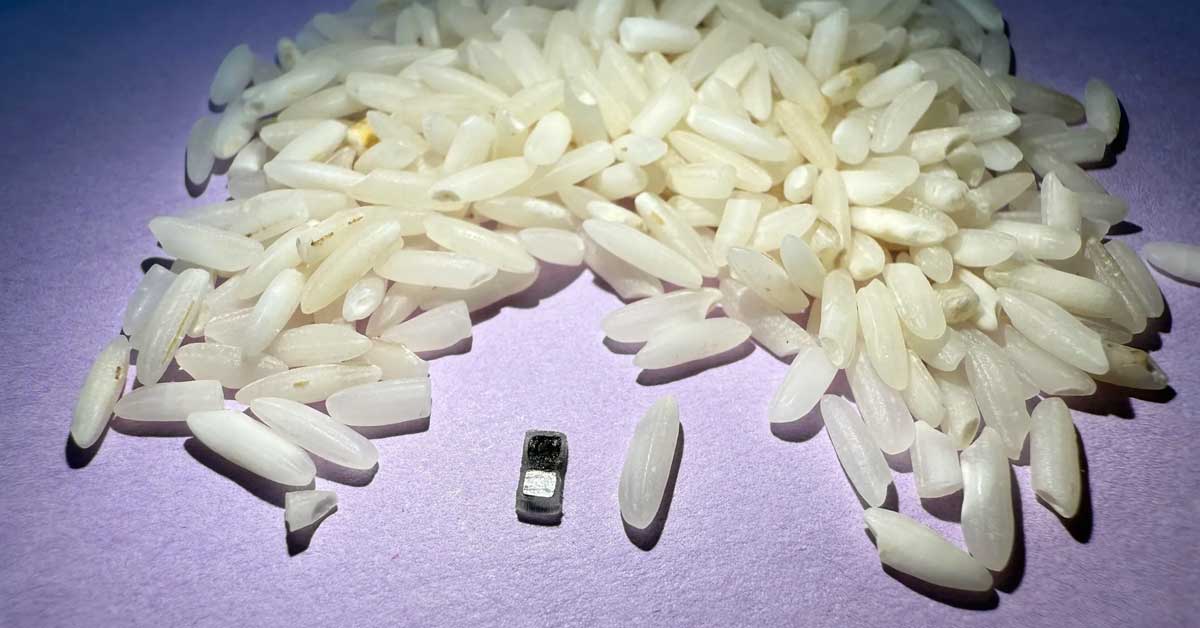
Efimov noted, "About 1% of children are born with congenital heart defects. The good news is that these children only need temporary pacing after a surgery. In about seven days or so, most patients’ hearts will self-repair. But those seven days are absolutely critical." With this tiny pacemaker, the team can gently stimulate a child's heart using a soft, wearable device, eliminating the need for further surgical procedures to remove it.
The removal of traditional pacemakers can pose significant risks, not just for infants but for any patient. As Efimov explained, "Wires literally protrude from the body, attached to a pacemaker outside the body. When the pacemaker is no longer needed, a physician pulls it out. The wires can become enveloped in scar tissue. So, when the wires are pulled out, that can potentially damage the heart muscle." This was tragically highlighted by the experience of Neil Armstrong, who faced complications after his temporary pacemaker was removed.
With the new design, the concerns surrounding those wires are now a thing of the past. The tiny pacemaker is accompanied by a flexible patch that rests comfortably on the patient's chest, continuously monitoring for any irregular heartbeats. When such irregularities are detected, the patch emits gentle pulses of near-infrared light, wirelessly adjusting the pacemaker to restore the heart to its optimal rhythm.
The groundbreaking research has shown promising results in both small and large animals, as well as in hearts from organ donors. Remarkably, despite its diminutive size, the pacemaker provides stimulation comparable to that of a full-sized device.
Looking ahead, Efimov and his team are enthusiastic about the potential of their research to improve traditional implants, paving the way for even more advancements in the field of medical technology.
This inspiring journey of innovation highlights the incredible strides being made to improve the lives of children and patients everywhere, bringing hope and healing through creativity and compassion.