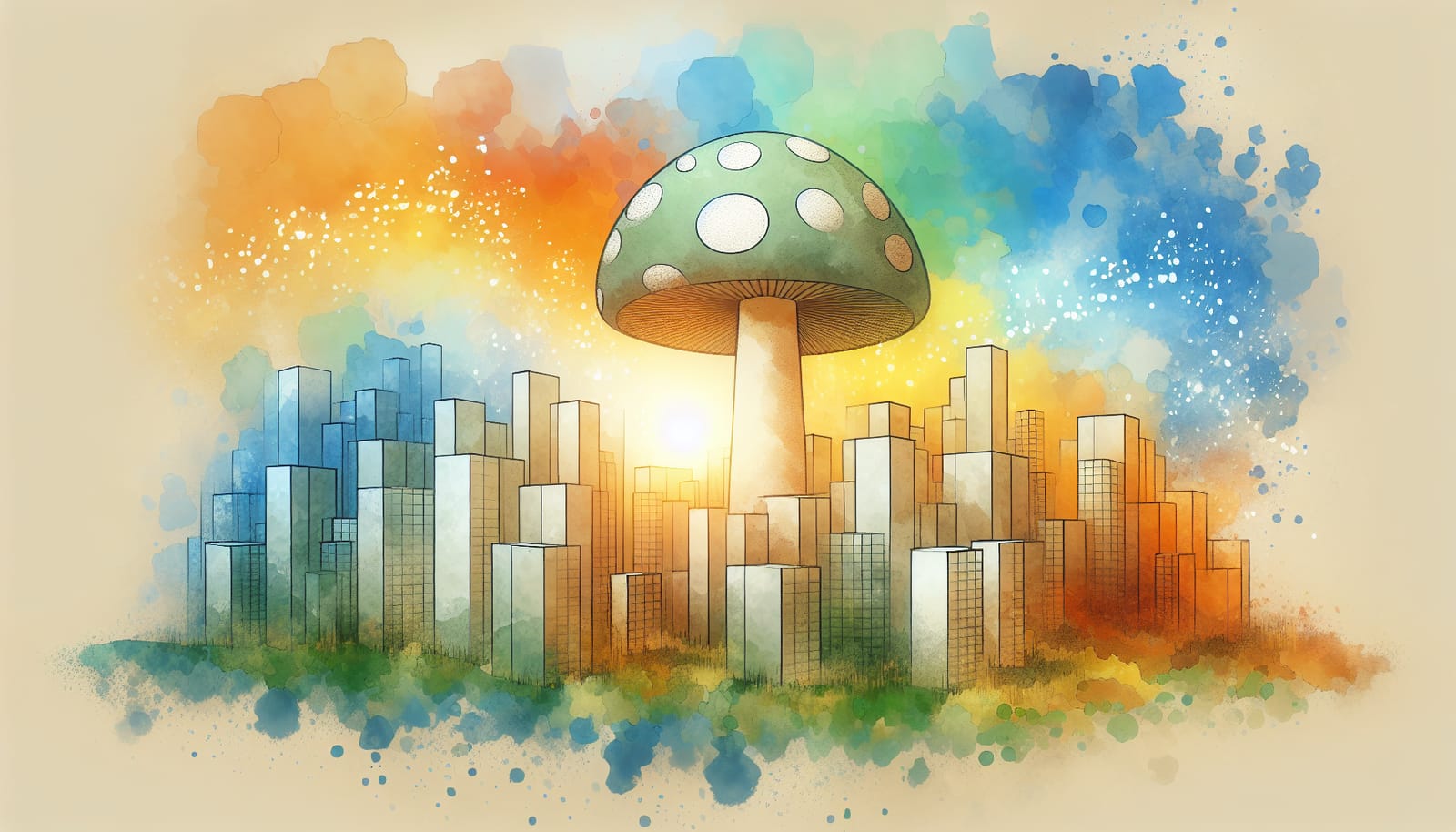
Mushrooms often capture our attention for serious issues, but there’s so much more to discover about these fascinating fungi! Beneath their charming caps lies a vibrant world of mycelium, a remarkable network of white threads that thrive beneath the surface, helping to address some of our most pressing environmental challenges.
Mycelium is the living essence of fungi, growing as delicate, branching strands known as hyphae. These threads spread out in every direction, seeking nourishment in the soil, where they play a crucial role in breaking down leaves, logs, and other organic matter. By transforming waste into nutrients, mycelium enriches the ecosystem, allowing trees and plants to flourish. This underground network can extend for impressive distances, often unseen, yet it serves as one of nature’s most effective recyclers.
If you take a moment to explore a damp forest and turn over a log, you might just find mycelium weaving its magic across the surface. This hidden organism is like a living glue, binding itself to whatever it consumes, which allows it to create solid materials that are lightweight and durable. By combining mycelium with various agricultural and industrial byproducts, we can craft innovative composite materials that are not only strong but also environmentally friendly.
Mycelium grows at room temperature and can be shaped into molds, resulting in breathable, biodegradable, and even fire-resistant structures. Designers and architects are beginning to embrace mycelium for its unique properties, using it in everything from eco-friendly packaging alternatives to acoustic panels that reduce noise in busy environments. There’s even potential for mycelium to serve as a substitute for leather, showcasing its versatility in the world of sustainable design.
While the possibilities for mycelium are exciting, there is still work to be done to enhance its strength and durability. Researchers are dedicated to improving mycelium-based composites, focusing on how to create materials that can withstand real-world conditions while retaining their eco-friendly benefits.
Innovative approaches are being explored, such as reinforcing mycelium with natural fibers from plants to boost strength while keeping the material biodegradable. Protective coatings made from natural substances could also help mycelium resist moisture, allowing it to thrive outdoors without compromising its compostability.
As we harness the power of technology, artificial intelligence is being employed to optimize the growth of mycelium, ensuring that we can produce consistent and effective materials. Each experiment brings us closer to understanding how to guide mycelium in constructing even stronger networks.
Though mycelium-based materials are not yet a complete replacement for traditional building materials, the future holds great promise. Researchers are actively investigating how mycelium could serve as insulation, enhance acoustic performance, and even have the potential to repair itself over time.
With ongoing advancements, we may soon witness the emergence of hybrid construction components, blending grown and engineered materials for a more sustainable future. While the mushroom is the visible part of this incredible organism, it’s the hidden mycelial network that has the potential to revolutionize the way we think about materials, paving the way for a greener world.
This inspiring journey into the world of mycelium was shared by Kumar Biswajit Debnath from the University of Technology Sydney. The future looks bright for fungi and their role in creating sustainable solutions for our planet!