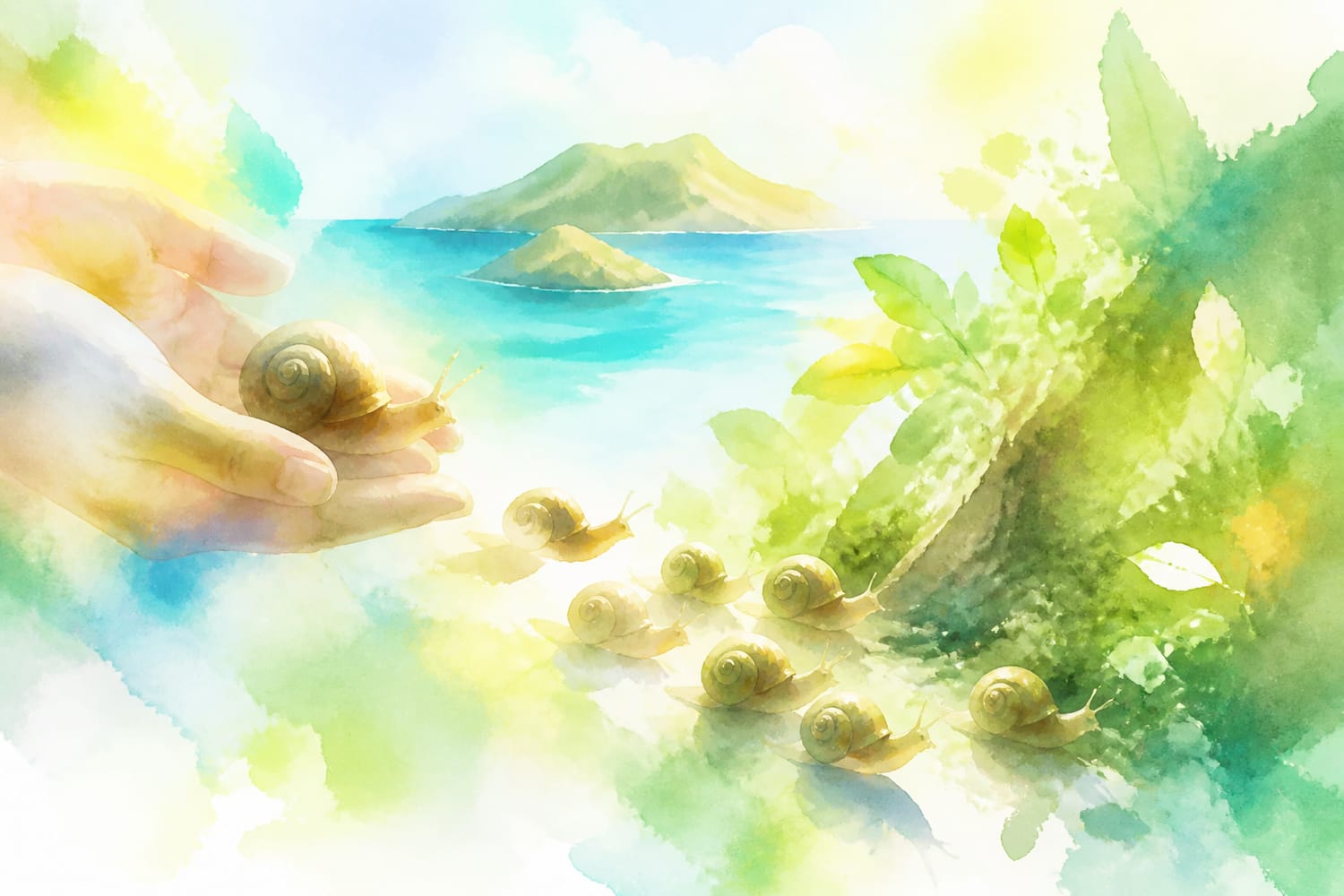
Tiny Snails Make a Joyful Return to Their Island Home
Hundreds of rare Desertas Island land snails are thriving back in their native habitat thanks to an inspiring international conservation effort led by England’s Chester Zoo.
The remarkable recovery began when biologists from ZooParc de Beauval in France discovered just 21 Geomitra coronula sheltering beneath a single rock. Believed to be the species’ last surviving wild population, the snails were entrusted to Chester Zoo for an urgent breeding program.
“By the time the Madeira government contacted us for help, one of the species, Geomitra coronula, was so close to extinction that its entire global population could fit inside a single petri dish,” said Tamas Papp, a member of Chester Zoo’s Invertebrates Team.
“We knew we had one shot to save them. If we missed this chance, that was it—they were gone.”
Chester Zoo’s specialists rose to the challenge. Through careful breeding and dedicated care, the original group produced enough descendants for more than 300 snails to be returned to Bugio, part of Portugal’s Madeiran archipelago.
Their home had previously suffered extensive damage from invasive goats, rabbits, and mice. The grazing animals stripped away vegetation, while mice—faced with a lack of natural drinking water—preyed on the snails.
Before the homecoming could take place, conservationists from the Madeiran Government removed invasive species and restored the island’s habitat. Their work created safer conditions not only for the snails, but also for vulnerable seabirds living there.
Transporting the pea-sized travelers to Bugio required determination and careful planning. With no suitable place to dock and only a brief period of favorable weather, the team journeyed to the island at night. They used red-spectrum torches to locate protective crevices for the snails without disturbing seabirds that are sensitive to artificial light.
Papp personally carried the 300 snails to their new home, completing what may have been one of the organization’s most challenging reintroductions.
The work is now expanding beyond this successful release. Chester Zoo hopes to create a broad partnership that will safeguard the species for generations.
“Our aim now is to build a network of institutions to support the conservation breeding program. That means establishing breeding centers in Madeira, working closely with local communities and securing further support of the authorities.
“We’ve already put a call out across the European network of conservation zoos to get involved and the response has been fantastic. Now we’re looking at transferring animals to begin building a healthy, secure population for the future.”
Although each snail measures only about 8 millimeters—roughly the size of a pea—its contribution to the environment is meaningful. By eating vegetation and enriching the soil, the mollusks help maintain healthier ecosystems. Conservationists hope their return will strengthen the continuing recovery of the islands’ delicate natural habitats.
From a population small enough to share a petri dish to hundreds crawling freely in the wild, the snails’ journey shows how compassion, cooperation, and committed conservation can give even the tiniest species a brighter future.