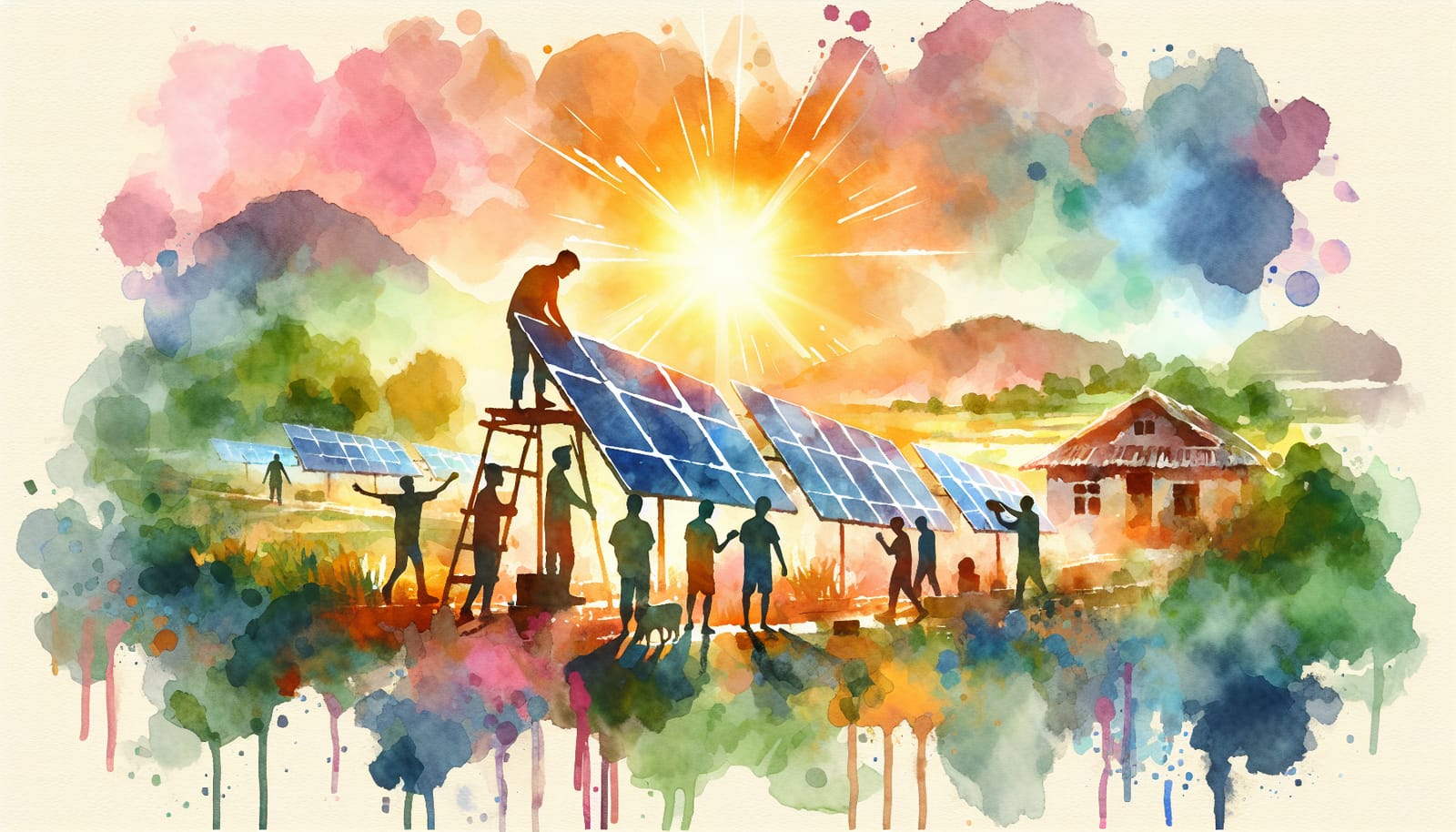
In the beautiful and diverse landscapes of Peru, there are inspiring stories of resilience and community spirit among Indigenous populations. While some remote areas still face challenges with energy access—around 30% of rural neighborhoods in the Amazon lack electricity, and many in the Andes experience unreliable power—there are bright initiatives shining through these obstacles.
The absence of electricity can significantly impact health services, education, food security, and connectivity. Many individuals have relied on diesel generators and wood-burning stoves, which can be costly and harmful to the environment. Yet, amidst these challenges, hope has emerged through the efforts of a dedicated group of students from the Federal University for Latin American Integration. These students founded Aylluq Q’anchaynin, a name that beautifully translates to "the energy of the community" in Quechua.
In 2020, during the challenging times of the COVID-19 pandemic, these students turned their focus toward a solar energy initiative in the Alto Mishagua Rural Settlement. This remote area, often inaccessible by road, lacked essential services like healthcare, clean water, and electricity. Roxana Borda Mamani, the inspiring leader of Aylluq Q’anchaynin, shared their vision: “Our idea was to be independent [and] promote the autonomy and self-management of the energy and communication systems.”
Before the solar project, community members faced the lengthy journey of traveling by boat to the nearest city with internet or electricity—a round trip that could take up to eight hours and require significant fuel. The team's first step was to install a satellite internet connection powered by a small solar system, allowing residents to charge their phones and flashlights, thus enhancing their connectivity.
The project flourished as they then provided a complete solar energy system for 40 households, empowering the entire community. This transformation means that residents can respond to emergencies more effectively, access public services, and improve both their educational opportunities and economic prospects.
The vision of Aylluq Q’anchaynin continues to grow, with plans to expand solar power installations in other remote Indigenous communities in need. “For us, fighting climate change means more than just resisting it—it means finding solutions, exploring alternatives, and transforming our way of life,” Borda expressed in her message to the United Nations. She emphasized the importance of adapting to the increasing challenges posed by climate change, including heatwaves, forest fires, and the scarcity of natural resources.
Through these uplifting initiatives, communities are not just surviving; they are thriving and paving the way for a brighter, more sustainable future.