Phoenix’s Senior Bridge Offers Hope, Stability, and a Path Home
A promising new housing community in Phoenix is helping older adults move beyond homelessness with dignity, support, and renewed independence.
Senior Bridge opened in March 2026, providing 40 private studio homes for adults aged 55 and older who are transitioning out of homelessness. The development arrives at an important time: Older adults are among Arizona’s fastest-growing populations experiencing homelessness and routinely occupy approximately 40% of the emergency shelter beds at Central Arizona Shelter Services, the region’s largest shelter provider.
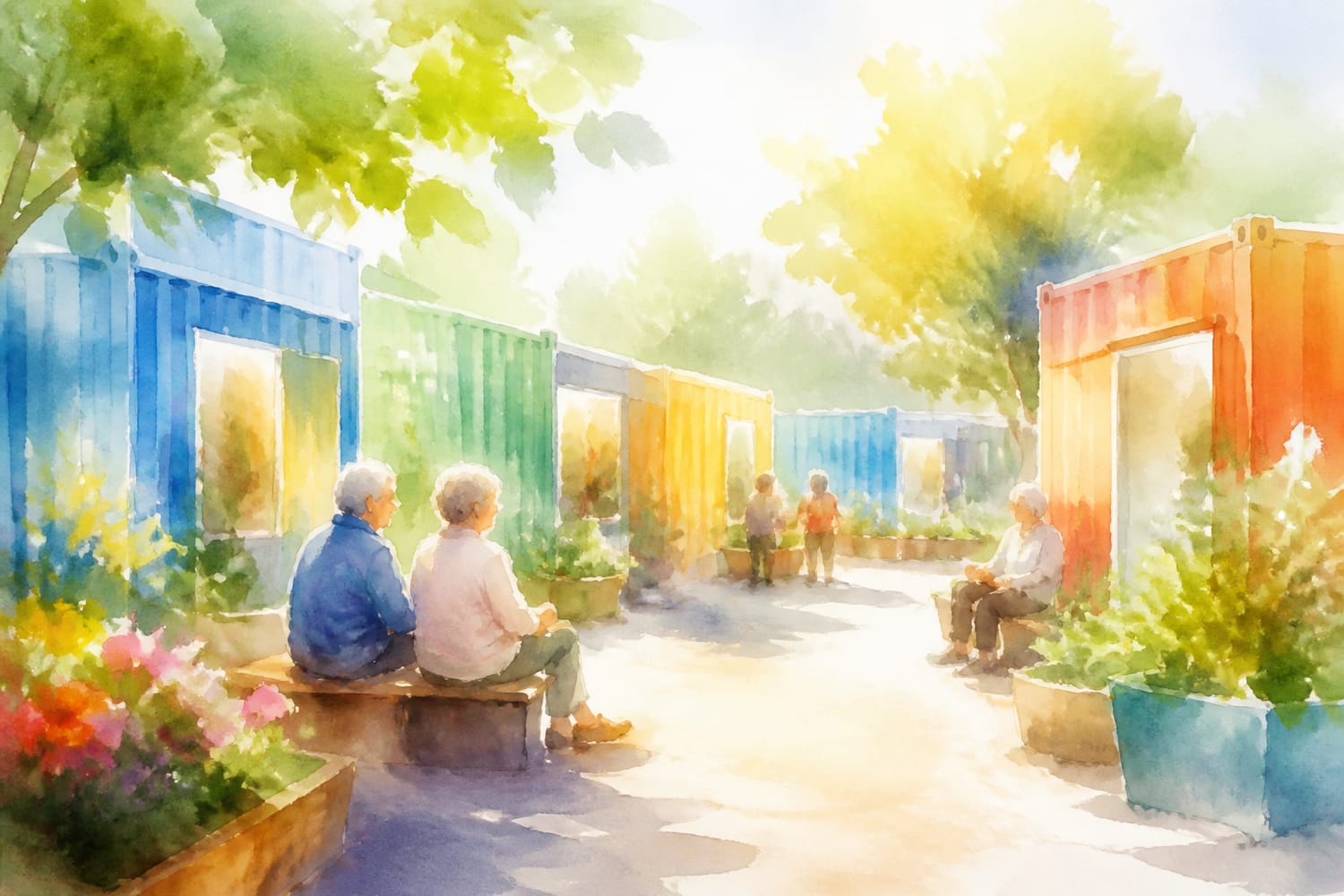
Operated by the housing nonprofit Mercy House, Senior Bridge combines comfortable living spaces with personalized assistance. Every 160-square-foot studio includes a twin bed, private bathroom with a sink, toilet, and shower, as well as a mini-fridge and microwave.
Residents are also paired with case managers who can connect them with health care, nutritional assistance, community activities, and other essential services. Although residents do not face a fixed deadline for leaving, the goal is to help them secure permanent housing within roughly 90 days.
The community’s thoughtfully repurposed shipping-container homes also demonstrate how sustainability can make housing more affordable. Solar panels supply electricity during the day, while lithium batteries provide power at night, allowing the development to operate independently from the electrical grid.
“By doing this, completely energy independent, it reduces one of the largest costs for an operator, and then for the permanent housing, it reduces the cost of your air conditioning bill,” said Brian Stark, Senior Bridge co-founder and CEO of Steel and Spark, the company that manufactured the homes.
The project’s first phase is only the beginning. A second phase is under construction and is expected to provide 54 permanent supportive apartments by the end of 2026. Residents will pay affordable rent without facing separate power bills, giving them greater financial stability as they build a lasting foundation.
Having transitional and permanent housing on the same campus will also allow residents to maintain their relationships, services, and progress. This approach reflects Mercy House’s belief that successful housing programs work best when shelter, outreach, social services, and permanent homes are closely connected.
“We have this mistaken idea that shelters exist in isolation,” Mercy House CEO Larry Haynes said. “You know, the effectiveness of a shelter depends upon the outreach teams that bring books to us, and the amount of permanent housing stock to which we can then connect people to.”
Community partnership is at the heart of Senior Bridge. By bringing together nonprofit leaders, local officials, businesses, service providers, and residents, the project shows what can be accomplished through a shared commitment to helping neighbors thrive.
“We will not solve homelessness if we’re working against each other,” Haynes said. “We will only solve homelessness if we’re all working together. Because the things that our local businesses want to turn a modest profit, the things that our neighborhoods want to have a decent place to live, are virtuous, are reasonable.”
Phoenix Vice Mayor Kesha Hodge Washington celebrated that hopeful vision during the ribbon-cutting ceremony for the project’s first phase.
“We are creating a model that centers dignity while delivering results,” she said.
With sustainable homes, compassionate services, and a clear pathway toward permanent housing, Senior Bridge is creating more than a place to stay. It is building a welcoming community where older adults can regain stability, strengthen connections, and move confidently toward a brighter future.